
A Business Model Under Pressure
For decades, India’s IT services industry thrived on a straightforward formula. Win large outsourcing contracts in the US and Europe, move execution offshore to India, scale teams rapidly, and bill clients based on time and manpower. This labour-arbitrage model helped build a nearly $300-billion industry, created over six million jobs, and turned cities like Bengaluru, Hyderabad, and Gurugram into global technology hubs.
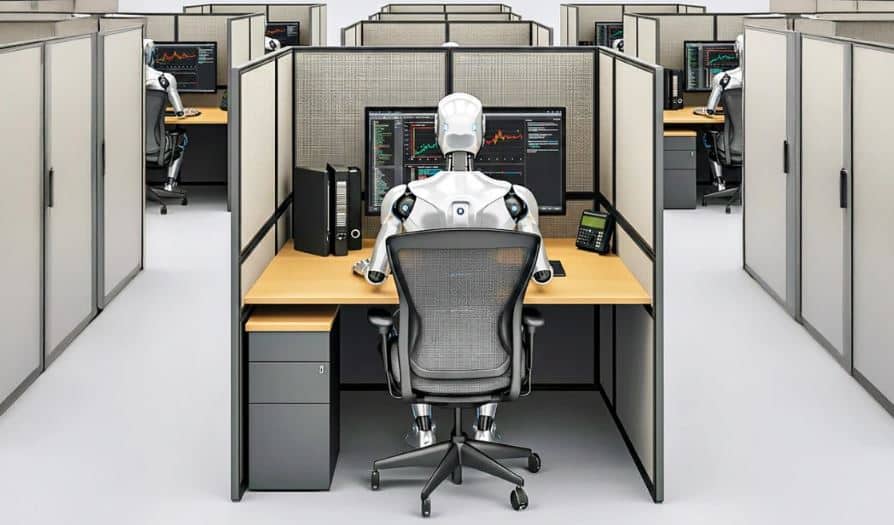
That long-standing model is now under its greatest strain. Artificial intelligence, automation tools, and generative AI platforms are rapidly reducing the need for large human teams to perform routine coding, testing, and support tasks. What once took hundreds of engineers can increasingly be done by far smaller teams assisted by AI.
AI as a Disruptor, Not a Destroyer
While AI poses a clear threat to traditional outsourcing, India’s IT leaders are careful not to frame it as an existential crisis. Instead, they see it as a structural shift that demands reinvention. AI is compressing project timelines, lowering costs, and changing how clients measure value. Billing by the hour is losing relevance as clients expect faster delivery and outcome-based pricing.
This shift is forcing Indian IT firms to move away from headcount-led growth and focus more on productivity, intellectual property, and specialised expertise.
From Labour Arbitrage to Value Arbitrage
Top IT companies are recalibrating their strategies around what they call value arbitrage rather than labour arbitrage. This means using deep domain knowledge, industry-specific solutions, and end-to-end digital transformation capabilities to justify premium pricing.
AI is becoming a tool to enhance margins rather than erode them. Firms are embedding AI into software development, cybersecurity, cloud migration, and enterprise operations. The goal is not to replace workers entirely, but to redeploy talent towards higher-value tasks such as system design, AI governance, data engineering, and client advisory roles.
Reskilling the Workforce at Scale
One of the biggest challenges facing the sector is talent transformation. Millions of IT professionals trained for traditional application maintenance now need new skills. Indian IT companies have responded with massive reskilling programmes focused on AI, machine learning, cloud platforms, data analytics, and cybersecurity.
Large firms are investing heavily in internal training platforms and partnerships with global technology providers. The emphasis is on creating AI-augmented engineers who can work alongside automation tools rather than compete with them.
Clients Demand Outcomes, Not Effort
Global clients are no longer impressed by the size of delivery teams. They want measurable outcomes such as faster product launches, lower operating costs, improved customer experience, and stronger data security. This shift aligns well with AI-driven delivery models, where efficiency and accuracy matter more than manpower.
As a result, Indian IT firms are redesigning contracts to focus on results, shared risk, and long-term value creation rather than pure cost savings.
A Slower but Stronger Growth Phase
The transition will not be painless. Growth rates may moderate as companies restructure operations, reduce fresher hiring, and invest heavily in technology. However, industry leaders believe this phase will ultimately make India’s IT sector more resilient.
By embracing AI instead of resisting it, Indian IT services firms aim to protect their global relevance and move up the value chain. The era of growth driven purely by adding people may be ending, but a new chapter built on intelligence, efficiency, and innovation is just beginning.
The Road Ahead
AI is redefining what it means to be an IT services powerhouse. For India, the challenge is clear but manageable. Success will depend on how quickly companies adapt their business models, retrain their workforce, and prove they can deliver strategic value in an AI-first world. If they get it right, AI may turn out to be less of a threat and more of a catalyst for the industry’s next evolution.