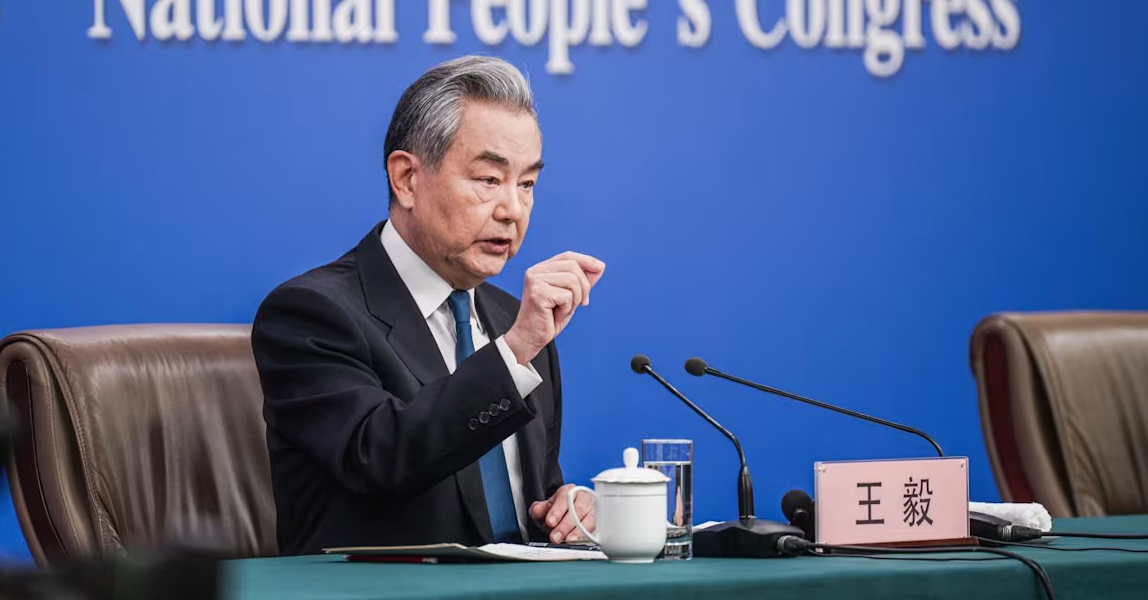

China has firmly rejected the idea that global affairs should be jointly managed by a small group of major powers, as Foreign Minister Wang Yi outlined the country’s vision for international governance amid escalating geopolitical tensions.
Speaking at a press conference on the sidelines of the Two Sessions on Sunday, Wang stated, “China does not subscribe to the logic of major power co-governance.” He emphasized the importance of adhering to multilateral frameworks, warning against bypassing the United Nations (UN) through alternative mechanisms a veiled critique of recent initiatives by the United States, including its Board of Peace.
During the 90-minute session, Wang answered 21 questions from both domestic and international media, addressing a wide range of issues including China-US relations, regional conflicts, and global stability.
China’s Stance on Major-Power Rivalry
Responding to a question about whether a joint-responsibility model could reduce tensions between China and the United States, Wang made it clear that Beijing rejects any arrangement in which a few powerful countries co-manage world affairs.
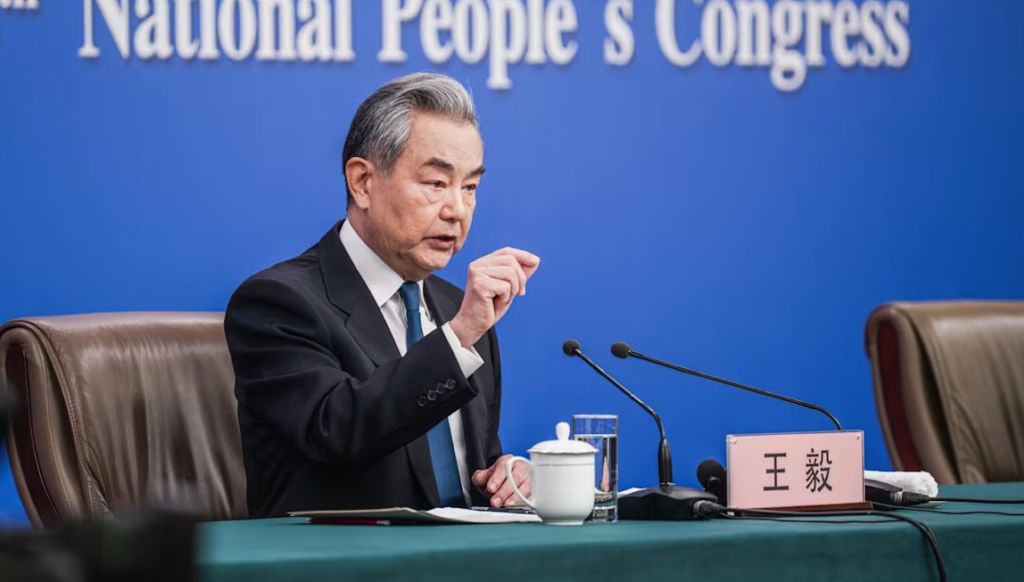
“History shows that rivalry among major powers and bloc confrontations have consistently led to human suffering and global instability,” Wang said. “China will never follow the old path where a strong country seeks hegemony, nor does it subscribe to the logic of major power co-governance.”
Emphasis on the UN and Multilateralism
Wang stressed that China advocates for a rules-based international order led by multilateral institutions rather than ad hoc coalitions of powerful nations. He urged all countries to respect UN principles and warned that bypassing these mechanisms could undermine global stability.
Addressing Regional and Global Flashpoints
The Chinese foreign minister also commented on several pressing geopolitical issues, including escalating conflicts in the Middle East, tensions with Japan, and disputes in the South China Sea. Wang highlighted the importance of dialogue, diplomacy, and adherence to international law in resolving these challenges.
Implications for China-US Relations
Wang’s remarks reflect Beijing’s cautious approach to its relationship with the United States, which he described as “the most consequential bilateral relationship in the world.” By rejecting co-governance, China signals its intention to shape global affairs independently while promoting multilateral engagement, rather than aligning with US-led frameworks.
Key Takeaways:
- China rejects the concept of global co-management by major powers.
- Beijing warns against bypassing the UN through alternative initiatives.
- Wang emphasizes multilateralism, diplomacy, and adherence to international law.
- China maintains a cautious but independent stance on China-US relations.