

A powerful 7.4 magnitude earthquake struck northern Japan on April 20, 2026, causing widespread concern and triggering tsunami warnings across several coastal regions. The quake occurred offshore in the Pacific Ocean and was felt strongly in nearby areas.
Because of its shallow depth, the earthquake had a stronger surface impact, increasing the risk of damage and tsunami activity.
Tsunami Warning Issued for Coastal Regions
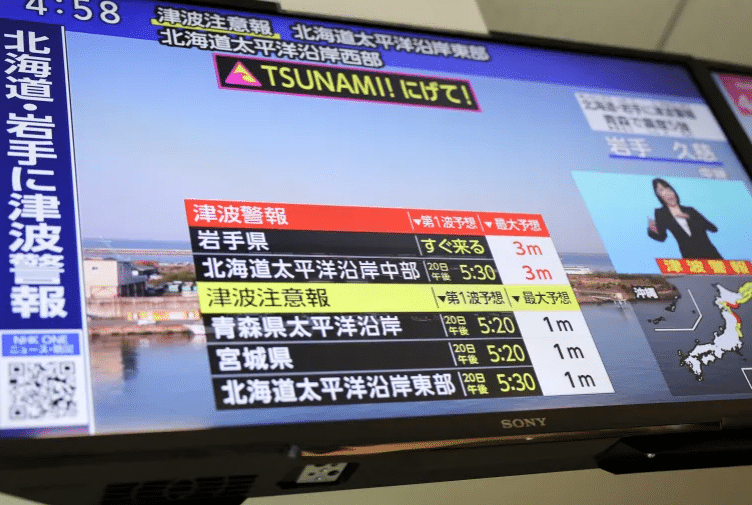
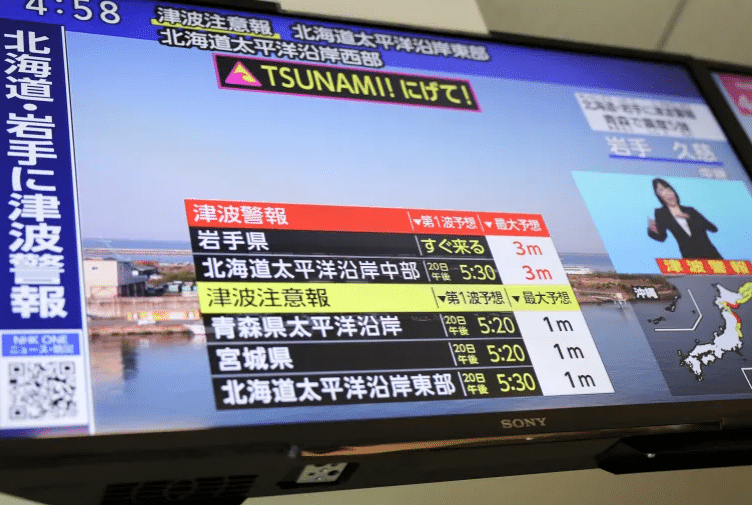
Immediately after the earthquake, authorities issued tsunami warnings for multiple areas, including Iwate, Aomori, and parts of Hokkaido. Residents were urged to move to higher ground without delay.
According to early estimates, tsunami waves of up to 3 meters were possible. In fact, initial waves were already recorded at some coastal locations, confirming the seriousness of the situation.
Therefore, officials stressed that people should not return to low-lying areas until it is declared safe.
Emergency Response and Safety Measures
Following the earthquake, Japan’s emergency response system was quickly activated. Several safety steps were taken to protect the public:
- Evacuation orders were issued in high-risk areas
- Train services were temporarily suspended
- Ports were cleared as ships moved to safer waters
- Emergency teams were deployed for rapid assessment
In addition, authorities warned that tsunami waves could arrive in multiple stages. As a result, people were advised to stay alert even after the first wave.
Damage and Casualty Update
So far, there are no confirmed reports of major damage or casualties. However, officials have cautioned that the situation is still developing.
Importantly, nuclear facilities in the affected regions have reported no abnormalities, which reduces the risk of a secondary crisis.
Nevertheless, detailed inspections are still underway to assess the full impact of the earthquake.
Risk of Aftershocks Remains High
After a major earthquake, aftershocks are common. Experts have warned that additional tremors may occur over the next few days.
Japan lies along the Pacific Ring of Fire, one of the most seismically active zones in the world. Because of this, earthquakes of this magnitude are not unusual, although they remain dangerous.
Therefore, residents are advised to stay cautious and follow official updates.
Why Japan Responds Quickly to Earthquakes
Japan has one of the most advanced disaster response systems in the world. As soon as an earthquake is detected, warnings are issued within minutes.
This rapid response helps reduce casualties and allows people to evacuate quickly. Over the years, strict building codes and preparedness measures have also helped minimize damage.
As a result, Japan is better equipped than most countries to handle such natural disasters.
Global and Economic Impact
Although the immediate focus is on safety, earthquakes in Japan can also affect global markets.
For example:
- Supply chains may face temporary disruptions
- Asian stock markets may see increased volatility
- Insurance and energy sectors could be impacted
However, the overall economic impact will depend on the extent of damage in the coming days.
Final Thoughts
The 7.4 magnitude earthquake in northern Japan is a reminder of the region’s constant exposure to seismic risk.
While early reports suggest limited damage, the situation remains uncertain due to possible aftershocks and ongoing tsunami threats.
For now, authorities continue to monitor developments closely, and residents are urged to prioritize safety and follow official guidance.